
Today’s blog is all about exercise intensity, but don’t worry, not the scary, all-out, gasping-for-air, crawling-out-of-the-gym kind.
We’re talking about finding the right amount of challenge for YOU to see results!
Before we dive in, take a moment to check in with yourself honestly:
When you exercise, are you challenging your body enough to create change?
…Do the last few reps feel difficult, but still doable?
…Do you sometimes need a short breather after lifting a heavier weight?
…Do you feel challenged and a little uncomfortable, in a good way?
Or does your workout feel a little too comfortable?
Same weights. Same effort. Skipping reps. Finishing every set knowing you probably could have done a whole lot more.
Here’s the thing, exercise is supposed to feel challenging!
Especially strength training.
When you lift weights, you’re asking your muscles to do more than they’re used to so they have a reason to adapt and get stronger.
But challenging does NOT mean crushing yourself.
You don’t need to push to exhaustion, feel destroyed after a workout or keep up with the person next to you.
Your version of “hard” should be specific to YOU, your body, your experience and where you’re starting today.
And if you’re new to exercise or getting back into it, you may be thinking:
How hard is hard enough?
What am I supposed to feel?
How do I know when it’s time to increase my weight?
Am I even doing this right?
Those are great questions, because there’s a sweet spot between too easy and too much.
And learning to find that sweet spot is where the magic happens!
Every time you safely challenge your body a little more, whether that means another rep, a heavier weight or better control, you’re giving it a reason to adapt.
That’s how you get stronger.
That’s how everyday activities start to feel easier.
And that’s how your workouts continue producing results instead of simply checking the “I exercised today” box.
So if you’ve ever wondered, “Am I working hard enough?” this blog is for you.
Keep reading for simple, beginner-friendly ways, plus helpful visuals, to understand exercise intensity and feel confident you’re getting the most out of every workout!
Why Intensity Matters (And, What That Really Means)
When it comes to strength training, intensity is what turns effort into results.
Not the “all-out, crush yourself” kind, but the right level of challenge for YOU!
Whether your goal is to get stronger, lose body fat, improve endurance, or simply move and feel better as you age, your body needs a reason to adapt.
And that reason is progressive challenge: asking your muscles to do just a little more than they’re used to. Here’s why that matters:
- Builds Strength for Real Life: Training at the right intensity challenges your muscles to adapt and grow stronger over time. That strength shows up everywhere outside the gym: carrying groceries, climbing stairs, getting off the floor, traveling, and keeping up with kids and grandkids.
- Supports Fat Loss & Metabolism: Appropriately challenging workouts increase your metabolism, helping you burn more calories during and after exercise. When paired with good nutrition, this supports fat loss while preserving (or building) lean muscle.
- Improves Heart & Overall Health: Strength training at the right intensity also benefits your heart and circulation. Over time, it improves cardiovascular efficiency, supports blood sugar control and reduces your risk of chronic disease; key for long-term health and independence!
Bottom line: progress happens when you challenge yourself consistently and safely!
Intensity is NOT about how hard someone else is working; it’s about whether you are working hard enough to move forward.
That’s where we as your coaches here at Results Fitness come into play. We take the guesswork out of intensity so you are doing enough!
Your workouts are designed to build strength and endurance, reduce body fat and improve your overall health without overdoing it or risking injury.
As your coaches, we work with you to help you choose the right weights, the right reps and the right pace so that you’re challenged appropriately and making real progress.
You don’t have to push blindly or wonder if you’re doing enough.
We make sure your workouts are working for you, so you can get stronger, feel better and keep building a body that supports the life you want to live.
How to Know You’re Working Hard Enough
Ok sooooo now back to my initial question:
When lifting weights, are you challenging your body enough to create change? Are you working at the right intensity too get real results?
Introducing The Rate of Perceived Exertion (RPE) scale: an effective tool for measuring effort and intensity when exercising.
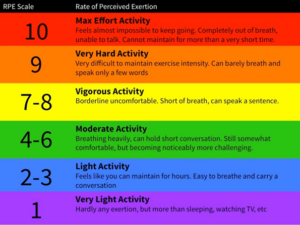
RPE is a 1-10 scale so you know if/when it’s time to turn up the heat! Here’s a quick breakdown:
-
- RPE 1-3: Easy effort, mostly recovery (e.g., walking or yoga).
- RPE 4-6: Moderate effort, but not challenging enough for maximum results.
- RPE 7-9: High effort, challenging but sustainable—this is where you should aim for big results!
- RPE 10: Maximum effort—this is often too intense and can increase risk of injury.
To get the best results, we recommend an RPE of 7-9 during your workouts.
If you’re working between 4-6, you’re on the right track but need a little more intensity, and an RPE of 10 is typically too uncomfortable, not sustainable for most people, and can lead to injury.
Coaching Tip: During your next workout, use the RPE scale to *honestly* rate your leevl of exertion. If you’re unsure, need help figuring this out or want feedback, let your RF Coaches know!
Choosing Challenging Weights
Once you’ve nailed your workout intensity between a 7-9 on the RPE scale, the next step is selecting the right weights!
Why is choosing challenging weights so important?
‘Cause your muscles need to be challenged to grow!
Lifting heavy weights (‘heavy’ being relative to your individual fitness level) challenges your muscles, forces adaptation, builds strength, and helps you get better overall results.
And that goes for any goal / desired results; whether it’s building more muscle, improving your endurance or enhancing functional strength for everyday life.
That’s right!
Strength training doesn’t just make you stronger in the gym, it makes everyday tasks easier and pain free, too!
Think about getting out of bed, carrying groceries, picking up kids or grandkids, playing pickleball, shoveling snow, and loading up that Costco cart!
You need to be physically strong and able to live your daily life and that means you have to be challenging your muscles at an intensity that’s right for you!
Whether you’re using dumbbells, kettlebells, or resistance bands, you always want to use weights that push you while maintaining proper form.
How do you know if your weights are challening enough? H
ere’s another scale to help you understand your current baseline and how to progress to the next level:
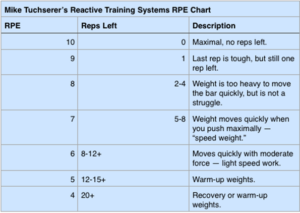
- Choose weights that challenge you without compromising form.
- Aim for an effort level of 8-9 out of 10
- You should feel fatigued by the end of your set but still able to maintain good form.
- If you can easily complete all sets and reps with no struggle, it’s time to increase your weight(s)!
Exercising is hard, but it’s also one of the best and most important things you can do to live the best possible life now and forever!
To get the results you want, you need to challenge yourself with the right intensity and weights.
And it’s never about perfection, it’s about progress!
Focus on your form, embrace the discomfort and remember that every challenging workout is a step closer to a healthier, stronger version of YOU!
Ready to take your workouts and results to the next level?
Start using the RPE scale to adjust your weights and push your limits.
You’ve got everything you need to make progress, now you just have to show up and put in the work!